AMD is bringing FSR 4 beyond Radeon desktop graphics cards, confirming that its machine-learning upscaling technology will reach APUs, gaming laptops, and handheld gaming devices by the end of 2026. The move could give AMD’s integrated graphics platforms a major boost, particularly in systems where power and GPU resources are limited.
AMD Senior Vice President and General Manager of the Computing and Graphics Group, Jack Huynh, confirmed the expansion while speaking with South Korean media in Seoul. His comments indicate that AMD is continuing to optimize the FSR 4 software stack for additional Radeon hardware rather than keeping the technology exclusive to discrete GPUs.
“We will expand FSR 4 across our product lineup, including APUs, gaming laptops and handheld devices, by the end of this year.”
FSR 4 originally arrived with AMD’s RDNA 4-based Radeon RX 9000 series graphics cards. Unlike earlier versions of FidelityFX Super Resolution, FSR 4 relies heavily on machine learning to reconstruct higher-quality images from lower-resolution game frames. AMD has since expanded support to RDNA 3-based Radeon RX 7000 series graphics cards, but it has so far left out its integrated graphics products.
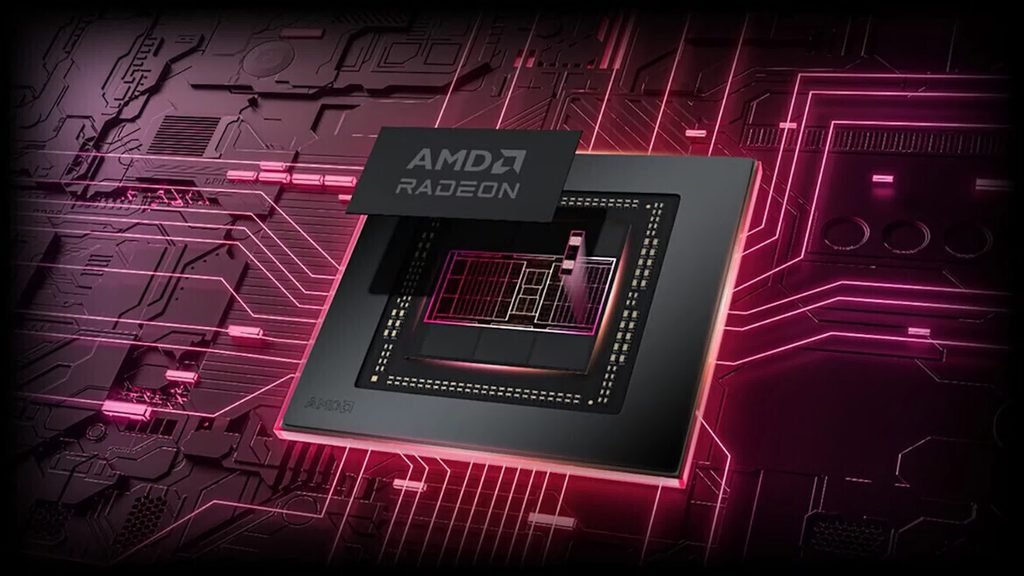
The upcoming APU support is particularly interesting for AMD’s Strix Halo platform. These chips use RDNA 3.5 integrated graphics and can deliver considerably more graphics performance than traditional laptop APUs, but they currently lack official FSR 4 support. AMD’s latest statement suggests that this limitation could change before the end of 2026.
There is also a technical reason why bringing FSR 4 to different Radeon architectures requires additional work. FSR 4.1 on RDNA 4 can use FP8 processing because the architecture includes native support for 8-bit floating-point data. RDNA 3, meanwhile, does not support FP8 natively, requiring AMD to adapt the model to use INT8 processing.
RDNA 3.5 could therefore require additional optimization before FSR 4 can run efficiently on integrated graphics. AMD has not yet explained whether it will use a modified version of the existing FSR 4.1 model or introduce a model specifically optimized for its APU hardware.
The expansion should also benefit gaming handhelds, where integrated graphics are used within strict power limits. FSR 4 could allow these devices to render games at lower internal resolutions while reconstructing a higher-quality final image, potentially helping developers target better performance without relying on more GPU power.
AMD has also previously indicated that RDNA 2-based Radeon RX 6000 graphics cards will receive FSR 4 support in 2027. For now, however, the company appears to be prioritizing APUs, gaming laptops, and handhelds, giving FSR 4 a much broader role across the Radeon ecosystem.
Sources: The Elec, VideoCardz