Xiaomi is preparing to expand its product lineup by entering the network-attached storage (NAS) market with the new Xiaomi Smart Storage. The company has confirmed that its first NAS device will be available through a crowdfunding campaign running from July 1 to July 8, targeting users who want a private and affordable storage solution for photos, videos, documents, and backups. With cloud storage subscription costs continuing to rise, Xiaomi appears to be focusing on users who prefer keeping their data under their own control.
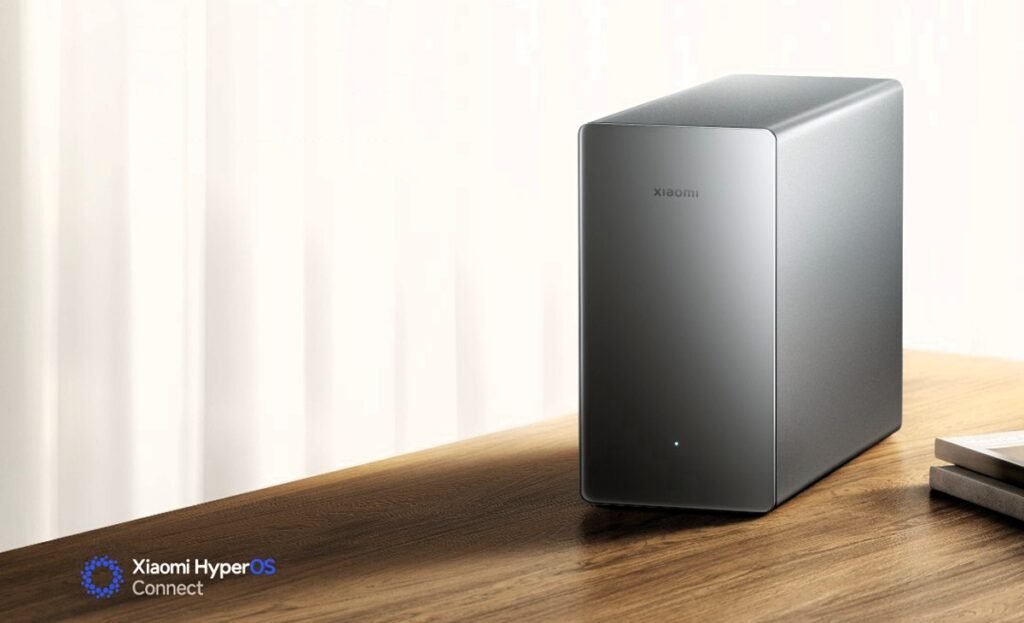
The Xiaomi Smart Storage features a compact cube-shaped design with a simple grey finish that blends well with modern desktops and home setups. It features a dual-bay design that supports both 2.5-inch and 3.5-inch SATA hard drives and SSDs, allowing users to choose the storage configuration that best fits their needs. According to information from a leaked engineering sample, the device supports up to 40TB of total storage, making it suitable for home media libraries, family photo collections, and business file backups.
The leaked prototype also provides a closer look at the hardware inside the NAS. It is reportedly powered by the Realtek RTD1619B, a quad-core ARM Cortex-A55 processor running at speeds of up to 1.7GHz. The engineering sample includes 2GB of DDR3L memory and 8GB of onboard storage for the operating system. While the prototype features a Gigabit Ethernet port, reports suggest the retail version will include at least one 2.5GbE Ethernet port, along with USB 3.0 and HDMI connectivity for additional flexibility.
During the crowdfunding campaign, Xiaomi will offer three storage bundles at introductory prices:
- Beginner Edition: 4TB – CNY 2,299 (around $338)
- Advanced Edition: 8TB – CNY 2,899 (around $426)
- Professional Edition: 16TB – CNY 4,699 (around $690)
These bundled options provide users with ready-to-use storage without requiring separate drive purchases, making the product more accessible for first-time NAS buyers.
Xiaomi also plans to integrate the Smart Storage with its broader ecosystem. The NAS is expected to support Android, iOS, Windows, macOS, and Linux, allowing users to access files from nearly any device. This compatibility makes it suitable for households with multiple operating systems, as well as small offices seeking centralized storage.
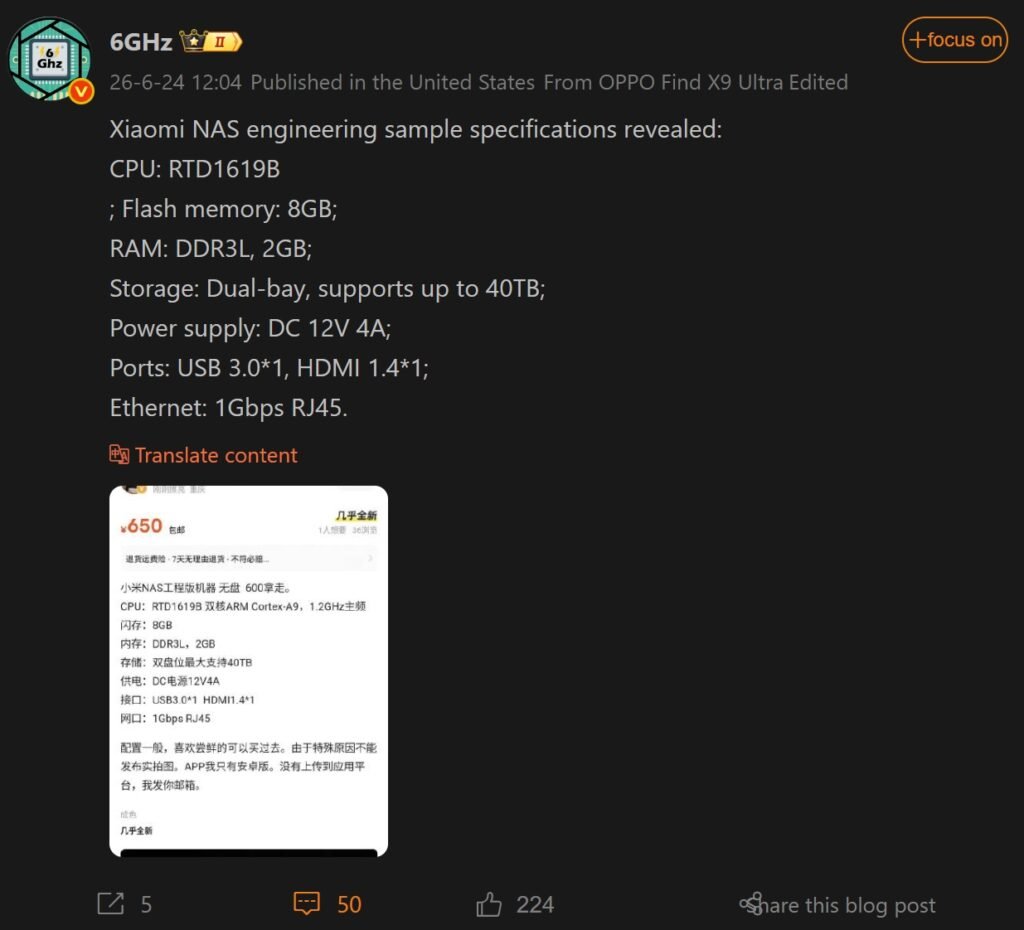
Although Xiaomi has revealed the hardware direction of the Smart Storage, some software features remain unknown. The company has not yet confirmed support for Docker containers, virtualization, or advanced third-party applications. More details are expected once the crowdfunding campaign begins.
The timing of Xiaomi’s NAS launch reflects growing demand for local storage solutions as users seek alternatives to cloud subscriptions. If Xiaomi delivers an easy setup process, reliable software, and competitive performance, the Smart Storage could attract buyers looking for an affordable entry into the consumer NAS market.