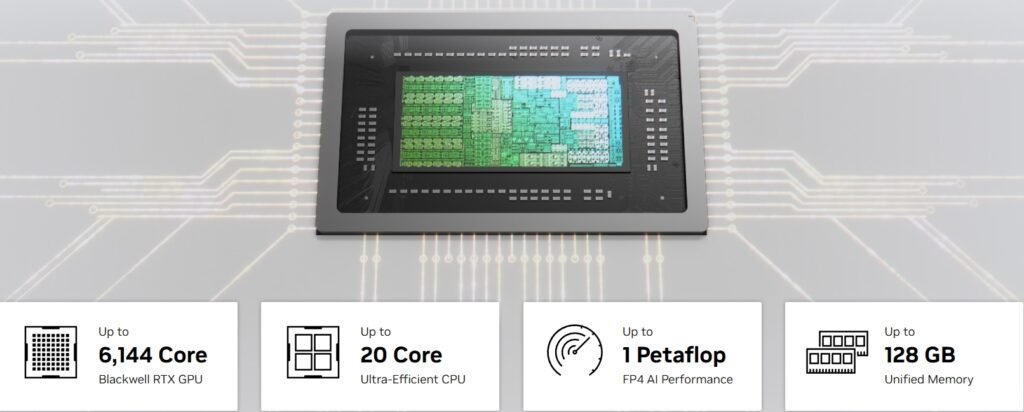
MediaTek and NVIDIA have announced RTX Spark, a new SoC platform aimed at Windows 11 PCs designed for local AI processing, gaming performance, and content creation in thin and power-efficient devices. The collaboration brings together MediaTek and NVIDIA to deliver a hardware platform built around on-device AI agents and next-generation RTX capabilities. The first systems based on RTX Spark are expected to ship in Fall 2026, targeting slim laptops and compact desktops that prioritize performance without high power draw.
RTX Spark is positioned as a shift toward AI-first computing on Windows 11, where tasks like content generation, productivity assistance, and system automation are handled locally instead of relying heavily on cloud services. NVIDIA’s RTX ecosystem is combined with MediaTek’s low-power architecture experience to create a balanced design that focuses on sustained performance and thermal efficiency. This approach is intended to support both gaming workloads and AI-driven applications within portable systems.
The partnership also builds on existing collaborations between the two companies in automotive computing and data center infrastructure, expanding their work into the consumer PC segment. Industry observers note that this move places MediaTek deeper into the premium Windows PC market, which has traditionally been dominated by x86-based platforms.
Key contributions from MediaTek in the RTX Spark platform include multiple system-level optimizations designed to improve efficiency and performance. These elements highlight how the SoC is structured to handle mixed workloads across AI, gaming, and productivity use cases.
- High-performance CPU architecture designed for responsive computing and stable multitasking
- Advanced system integration optimized through close collaboration with TSMC manufacturing processes
- Unified memory controller supporting up to 128GB of shared system memory for AI and creative workloads
- Intelligent power management system using an advanced PMIC design to reduce energy consumption under load
- Integrated ultra-low latency connectivity enabling stable wireless performance and hybrid cloud-to-edge AI tasks
The platform is also designed to support what NVIDIA describes as “personal AI agents,” allowing software to operate more intelligently across applications, games, and creative tools. This direction aligns with broader industry trends where AI processing is increasingly being moved directly onto end-user devices rather than being fully cloud-dependent.
For gaming, RTX Spark is expected to enable improved performance in thin-and-light laptops by combining RTX graphics acceleration with efficient CPU and memory design. This could allow manufacturers to build slimmer systems that maintain consistent frame rates without relying on high-wattage cooling solutions.
With RTX Spark, MediaTek and NVIDIA are aiming to redefine how Windows 11 PCs handle AI workloads, gaming, and everyday computing. The first wave of devices is set to arrive in Fall 2026, marking a new phase in AI-integrated PC design focused on efficiency and portability.