OpenAI has officially introduced its first hardware product, the Codex Micro, following months of speculation about what type of device the company would launch. Earlier reports suggested OpenAI could enter the hardware market with products such as a smart speaker or a smartphone-style device, but the company has instead released a compact mechanical keypad designed for AI workflows.
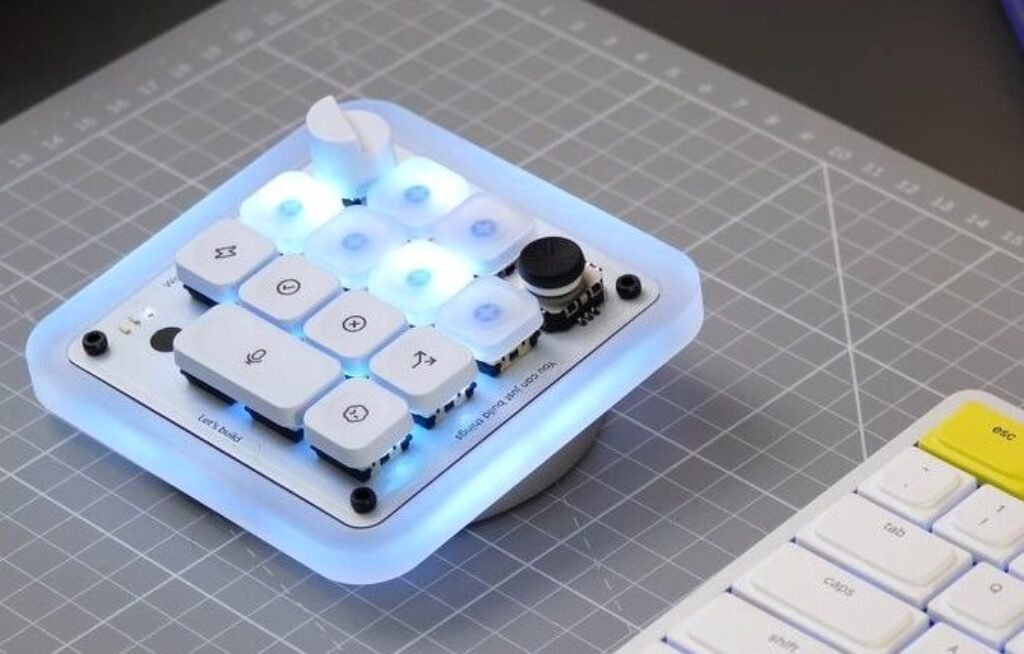
The Codex Micro is developed with specialty keyboard maker Work Louder and is aimed at users who want physical controls for ChatGPT and other applications. The device is priced at US$230, placing it in the premium accessory category alongside programmable keypads used by creators, streamers, and professionals.
The keypad focuses on customisation and flexible controls, featuring:
- 13 mechanical keys with options for clicky or silent switches
- One touch sensor for additional inputs
- Rotary encoder for scrolling, adjustments, or custom functions
- Planar joystick for extra control options
- RGB lighting on both the keys and the sides of the device
- Bluetooth and USB-C connectivity for wireless and wired use
- 31 interchangeable keycaps included for custom layouts
The keycaps are made using PBT and polycarbonate materials, while the main body combines CNC-machined polycarbonate and aluminium construction. The design gives the keypad a more premium feel compared to standard macro pads.
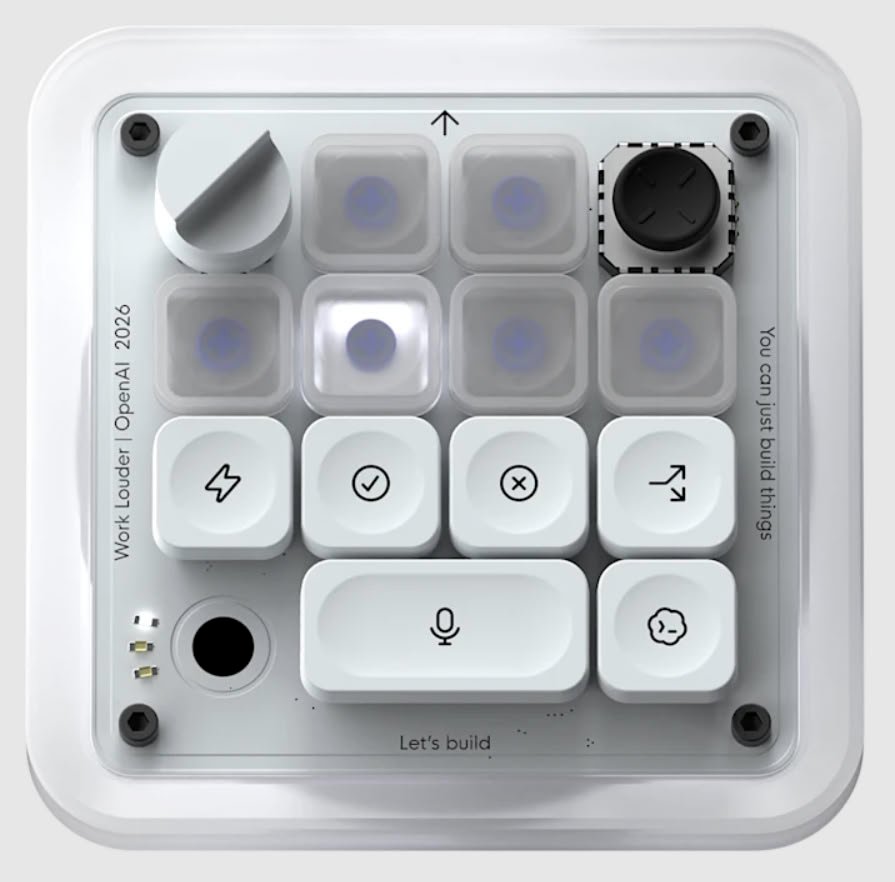
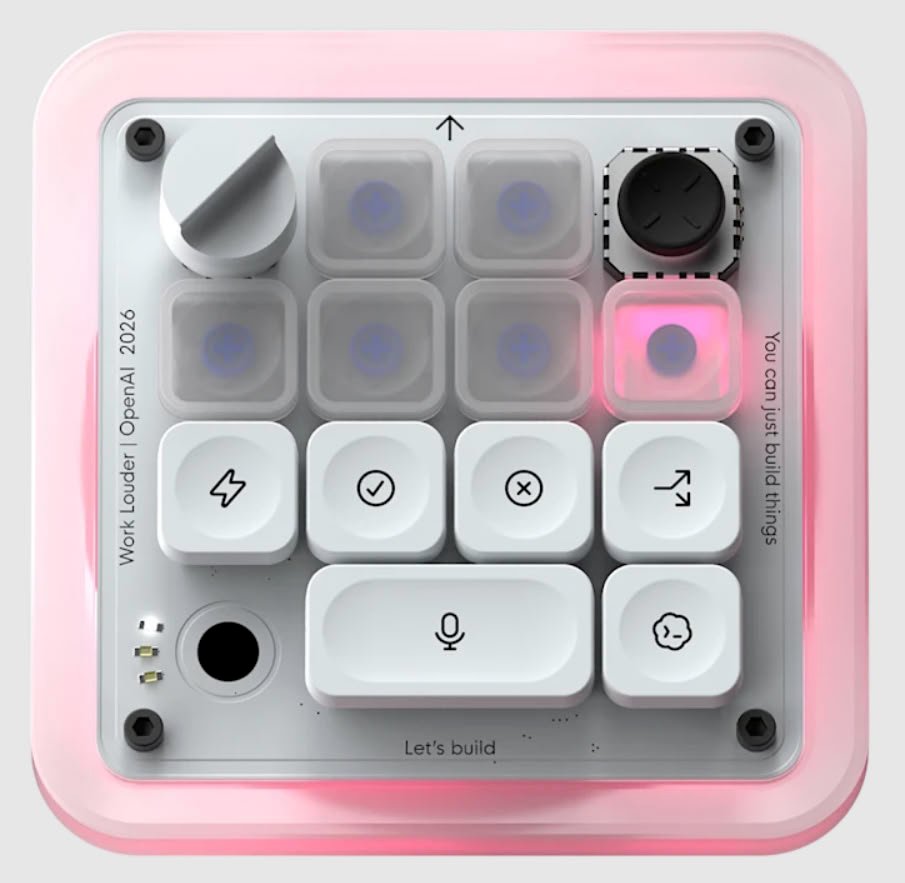
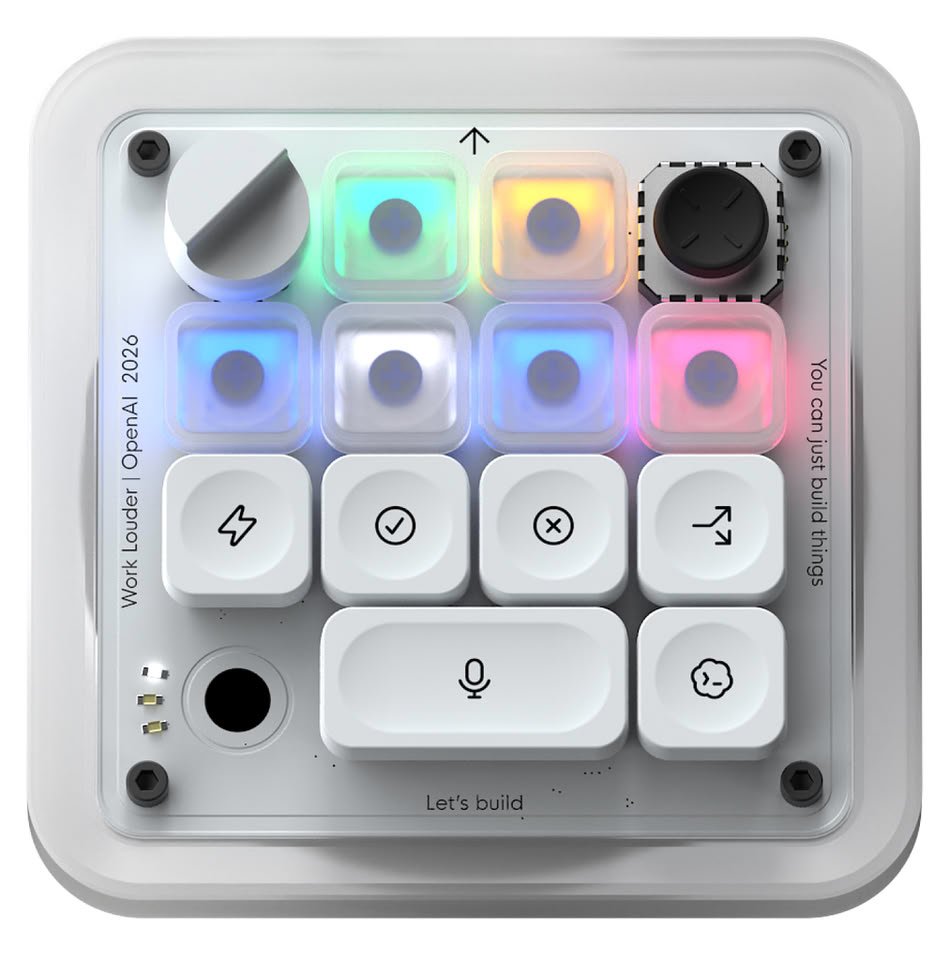
Although the Codex Micro is designed around ChatGPT, it is not limited to OpenAI’s software. The device can reportedly work with any application that supports keyboard input, allowing users to assign shortcuts and commands for different programs.
The biggest question surrounding the Codex Micro is its price. At $230, it targets a small group of users who regularly rely on programmable controls and AI tools. While the hardware offers a high level of customisation, many users may find it difficult to justify the cost compared to other programmable keyboards and control pads available on the market.
OpenAI’s first hardware release takes a different approach from the AI devices many expected. Instead of replacing smartphones or creating a standalone assistant, the Codex Micro works as a dedicated physical interface for users who want faster access to AI-powered tools.