HKC has revealed the M10 Ultra, its latest monitor that introduces RGB Mini LED technology for the first time. This announcement follows earlier reports suggesting the company was developing the world’s first RGB Mini LED gaming monitor, although detailed specifications were not available until now. The latest information, shared by industry insider @realVictor_M, provides a clear look at what the M10 Ultra offers, positioning it as a potential game-changer for high-end monitors.
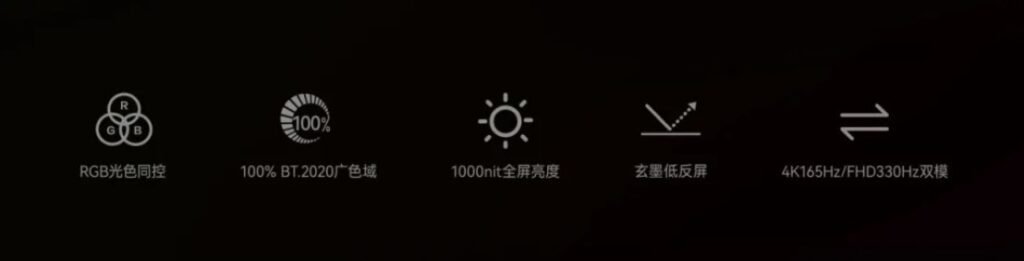
The M10 Ultra features a 4K resolution panel with a 165 Hz refresh rate, designed to deliver smooth visuals for both gaming and professional applications. For users focused on competitive gaming, the monitor can switch to 1080p at 330 Hz, offering faster frame rates while maintaining responsiveness. This flexibility makes the M10 Ultra suitable for a range of uses, from immersive gaming to content creation, where color accuracy is crucial.
Color performance is a key aspect of the M10 Ultra. The monitor reportedly covers 100% of the BT.2020 color space, which is among the widest gamuts available in consumer displays. This ensures vivid and accurate color reproduction, making the monitor suitable for video editing, digital design, and other tasks that require precise color representation. The panel also supports HDR, with brightness levels reaching up to 1,000 nits in standard HDR mode. Reports suggest that RGB Mini LED technology can boost peak brightness even further while maintaining color fidelity, giving the M10 Ultra an edge over traditional LED displays and positioning it as a competitor to OLED monitors in terms of image quality.
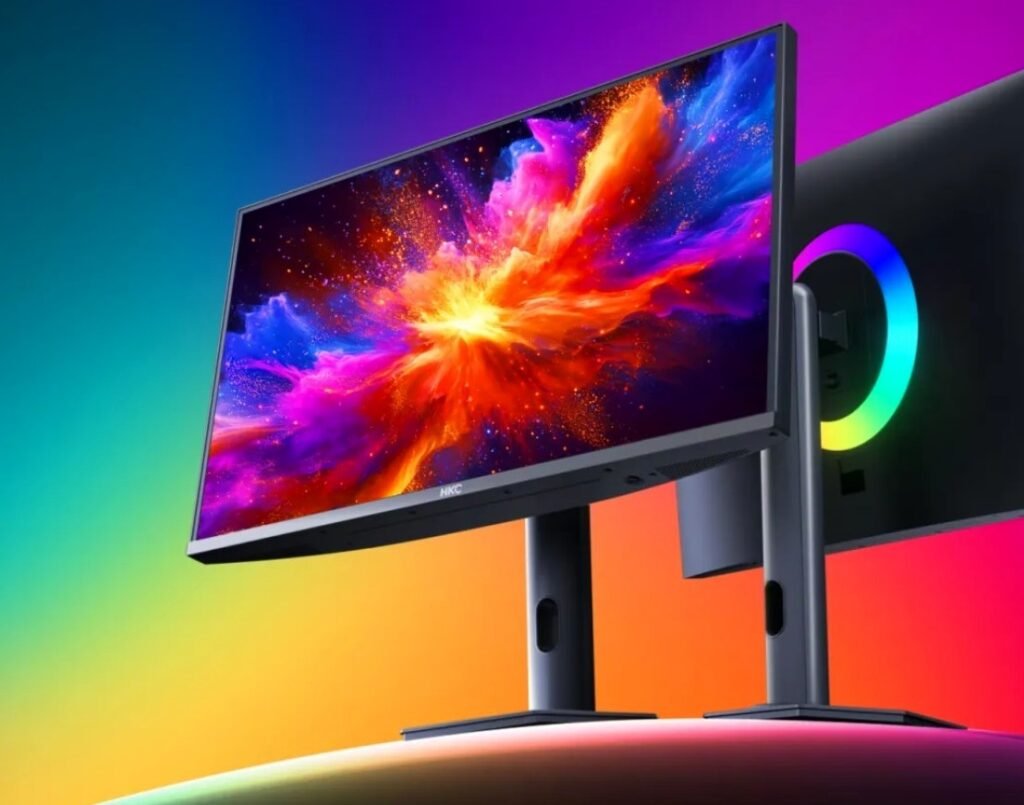
The design of the monitor combines modern aesthetics with functional features. Early images suggest thin bezels around the screen, paired with a larger, ergonomic stand that allows adjustments in height, tilt, and swivel. On the back, the monitor includes an RGB lighting ring, adding visual appeal without affecting display performance.
Connectivity is another area where the M10 Ultra stands out. While detailed port information is limited, the monitor is expected to include a 98W USB-C port with power delivery and the latest DisplayPort 2.1 interface. This is a significant addition because many high-end monitors still rely on DP 1.4, which cannot handle uncompressed 4K at 165 Hz. DisplayPort 2.1 provides the necessary bandwidth for high-resolution, high-refresh-rate output, ensuring that the monitor can deliver its full potential without compression artifacts or color degradation.
The M10 Ultra appears to be aimed at both gamers and professional users who demand a combination of speed, resolution, and color accuracy. Its RGB Mini LED technology allows for local dimming across multiple zones, enhancing contrast and improving HDR performance compared to conventional LED displays. The potential for extremely high brightness and precise color control could make it a strong alternative to OLED panels for those seeking long-term reliability and reduced risk of burn-in.
HKC has not yet confirmed pricing or an exact release date for the M10 Ultra, but the monitor is expected to attract attention from enthusiasts looking for the latest display technology. With features such as 4K 165 Hz, DisplayPort 2.1, and wide color coverage, the M10 Ultra may influence trends in the monitor market, particularly for high-performance gaming and professional-grade displays.
As more details emerge, the M10 Ultra is likely to be compared with other premium monitors, including OLED and high-end IPS panels. Its combination of refresh rate, resolution, color accuracy, and advanced backlighting technology could redefine expectations for what a flagship monitor offers in both gaming and professional environments.
The HKC M10 Ultra demonstrates the company’s commitment to pushing display technology forward and may set new standards for mini LED monitors in the months ahead.