Epomaker has introduced a new addition to its Luma keyboard lineup with the reveal of the Epomaker Luma100, a compact 96% wireless mechanical keyboard that keeps the numeric keypad while reducing the overall footprint. The keyboard follows the earlier appearance of the smaller Epomaker Luma40, which was shown during CES 2026. While the Luma40 focused on a very compact ortholinear layout, the Luma100 moves toward a more traditional design aimed at users who prefer a familiar typing arrangement while still saving desk space.

Although the keyboard is not yet listed for purchase on the official Epomaker store, the product page has gone live, revealing several details about the upcoming model. The Luma100 measures 37.1 × 12.85 cm and features a front height of around 23 mm with keycaps installed. The 96% layout keeps most of the keys found on a full-size keyboard, including the number pad, while bringing the navigation cluster closer to the main typing area to reduce the overall size.
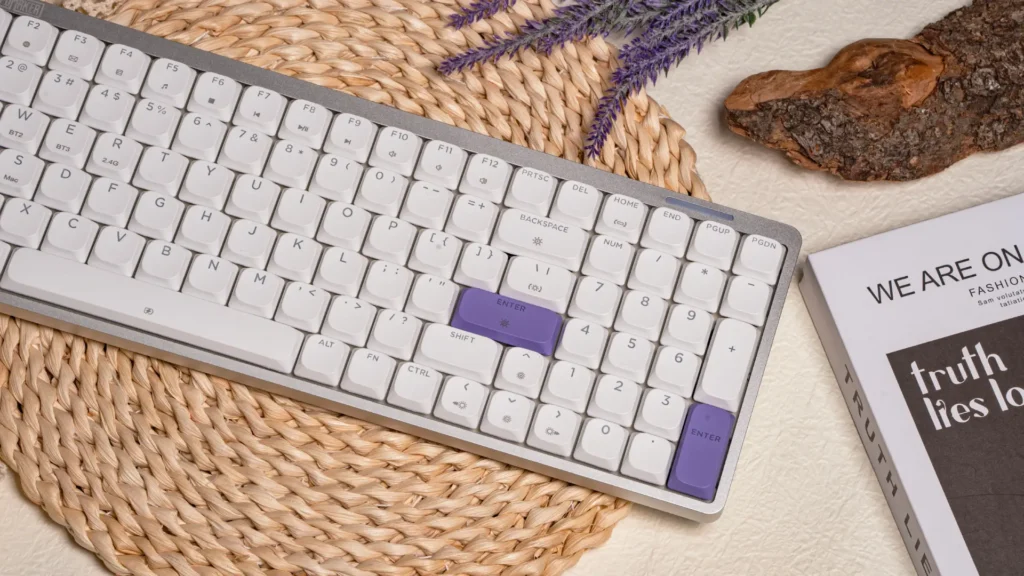
The keyboard uses a low-profile design combined with a full aluminum chassis, which helps maintain durability while keeping the structure slim. Despite the metal construction, the Luma100 weighs approximately 0.62 kg, making it lighter than many aluminum keyboards in a similar size category. Epomaker also includes a slim folio case with the keyboard, a detail that may appeal to users who carry their peripherals between workspaces or travel setups.
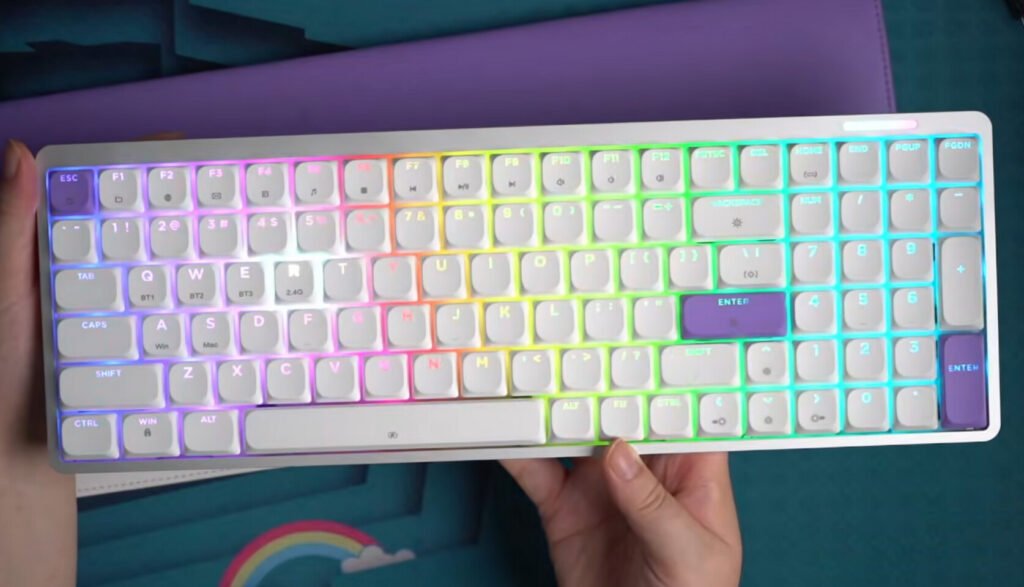
A structural change compared to the Luma40 is the mounting system. The Luma100 uses a gasket mount rather than the tray mount used in the smaller model. This construction is widely used in mechanical keyboards to provide a softer typing feel while helping reduce vibrations from keystrokes. The keyboard also switches back to a traditional row-staggered layout instead of the ortholinear grid design found on the Luma40, making the transition easier for users who are accustomed to standard keyboards.
The Luma100 ships with ABS DSA low-profile keycaps featuring shine-through legends. These keycaps work alongside north-facing RGB lighting, allowing the legends to remain visible when the backlight is active. The flatter DSA profile helps keep the keyboard height lower while maintaining a uniform keycap surface across the layout.
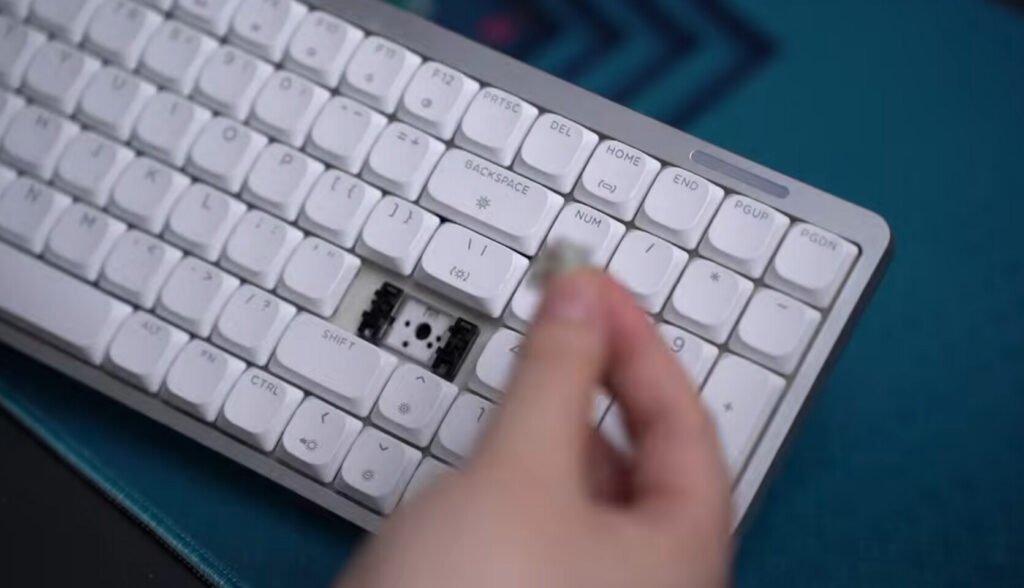
Switches used in the keyboard appear to follow the Gateron Low-Profile 2.0 switch standard, similar to the switches used in the Epomaker Luma84. Early preview units suggest that Epomaker may be using a custom variant, featuring clear polycarbonate housings paired with light green stems. Detailed specifications, such as actuation force and travel distance, have not yet been confirmed.
For connectivity, the keyboard supports USB Type-C wired mode, 2.4 GHz wireless, and Bluetooth connections, allowing it to pair with multiple devices, including PCs, tablets, and mobile devices. A 3,000 mAh battery powers the wireless modes and is expected to provide extended usage depending on backlight settings and connection type.
The Luma100 is also compatible with the VIA keyboard configurator, enabling users to remap keys, configure RGB lighting, and create macros. Users will need to load a JSON configuration file so the open-source software can recognize the keyboard. Pricing and release timing for the Luma100 have not yet been announced, but the published product page suggests that availability may follow in the near future.