Apple has officially introduced its latest high-performance laptop processors, the M5 Pro and M5 Max, designed to power the new generation of the MacBook Pro. The announcement marks another step in the company’s transition to in-house silicon, with a focus on higher CPU throughput, expanded GPU scalability, and increased memory bandwidth for professional users. The new chips are built around a redesigned internal layout called Fusion Architecture, which combines two third-generation 3-nanometer dies into a single system on a chip.
The Fusion Architecture integrates the CPU, GPU, Media Engine, unified memory controller, Neural Engine, and Thunderbolt 5 controllers into one package. By linking two dies with high-bandwidth and low-latency interconnects, Apple aims to scale performance without sacrificing efficiency. This dual-die approach allows the M5 Pro and M5 Max to push higher core counts and memory bandwidth compared to previous models.
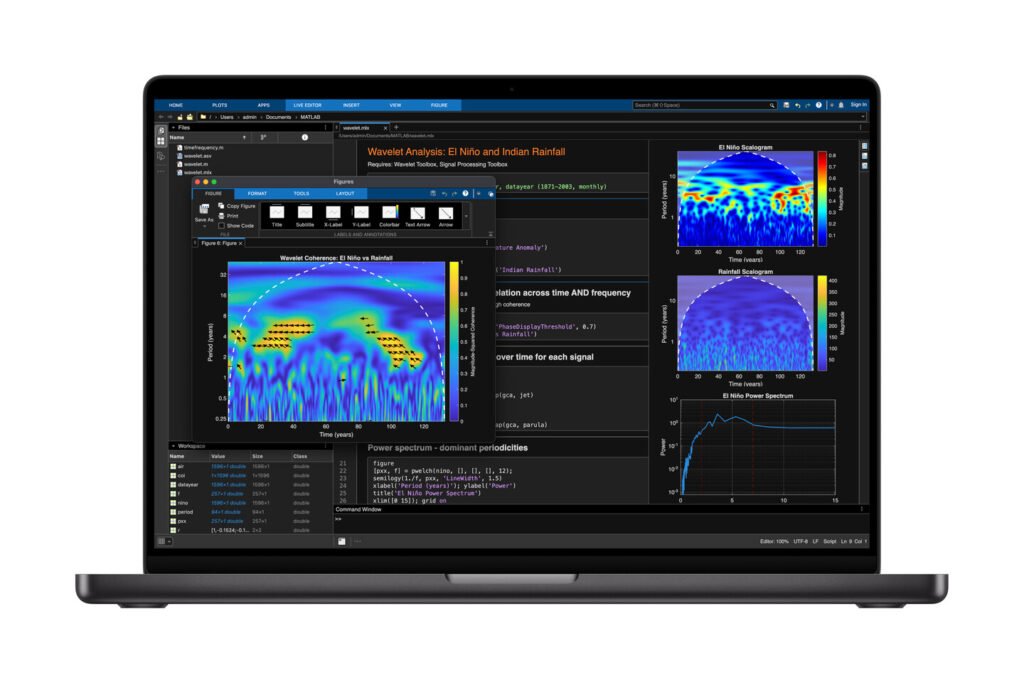
Both chips feature a new 18-core CPU configuration. The design includes six high-performance cores, now referred to as “super cores,” along with 12 new performance cores optimized for multithreaded workloads. Apple states that the updated CPU architecture delivers up to 30 percent better performance in professional tasks compared to the prior generation. In comparison to M1 Pro and M1 Max, multithreaded performance is rated up to 2.5 times higher, targeting users working on simulations, complex data modeling, software development, and other compute-heavy tasks.
The GPU architecture has also been expanded. M5 Pro supports up to a 20-core GPU, while M5 Max scales up to 40 GPU cores. Each GPU core includes a Neural Accelerator to improve AI and machine learning performance. According to Apple, peak GPU compute for AI workloads is more than four times higher than the previous generation. The new GPUs also include second-generation dynamic caching, hardware-accelerated mesh shading, and a third-generation ray tracing engine. In applications that make use of ray tracing, graphics performance can increase by up to 35 percent over M4 Pro and M4 Max models.
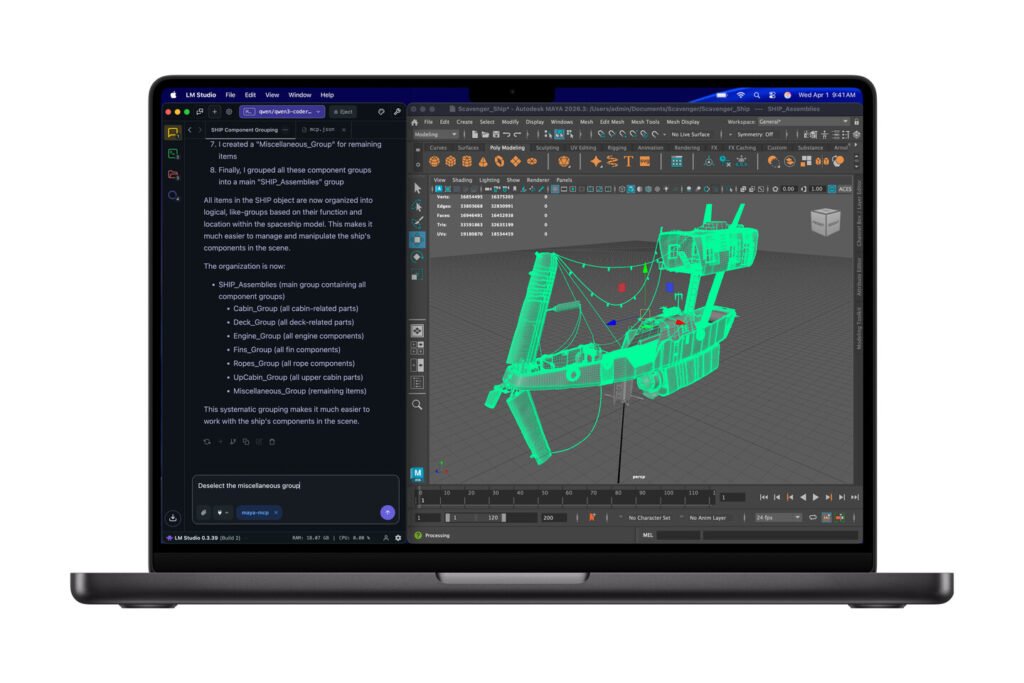
Memory capacity and bandwidth have been increased to match the higher compute capabilities. M5 Pro supports up to 64GB of unified memory with bandwidth reaching 307GB/s. M5 Max doubles the memory ceiling to 128GB and raises memory bandwidth to 614GB/s. The higher bandwidth is intended to support tasks such as 3D rendering, large-scale video production, AI model training, and handling extensive datasets. Apple claims M5 Max delivers over four times the peak GPU compute of its direct predecessor and more than six times that of M1 Max in AI-focused scenarios.
Beyond CPU and GPU improvements, the chips integrate a faster 16-core Neural Engine with increased memory bandwidth to accelerate on-device AI features. The updated Media Engine supports hardware-accelerated H.264 and HEVC, AV1 decode, and ProRes encode and decode. Thunderbolt 5 is also integrated directly into the chip, with each port powered by its own dedicated controller. This implementation is designed to improve data throughput and connectivity for external displays and high-speed storage devices.
Apple has also introduced Memory Integrity Enforcement, described as an always-on memory safety feature that does not reduce system performance. The company says this addition enhances platform security while maintaining the efficiency gains that Apple Silicon is known for.
The new MacBook Pro models powered by M5 Pro and M5 Max are available for pre-order starting tomorrow, with general availability beginning March 11. The launch aligns with Apple’s broader environmental targets under its Apple 2030 initiative, which aims to make the company carbon-neutral across its entire footprint by the end of the decade. Apple notes that the improved power efficiency of the new chips helps reduce overall energy consumption across the product lifecycle.
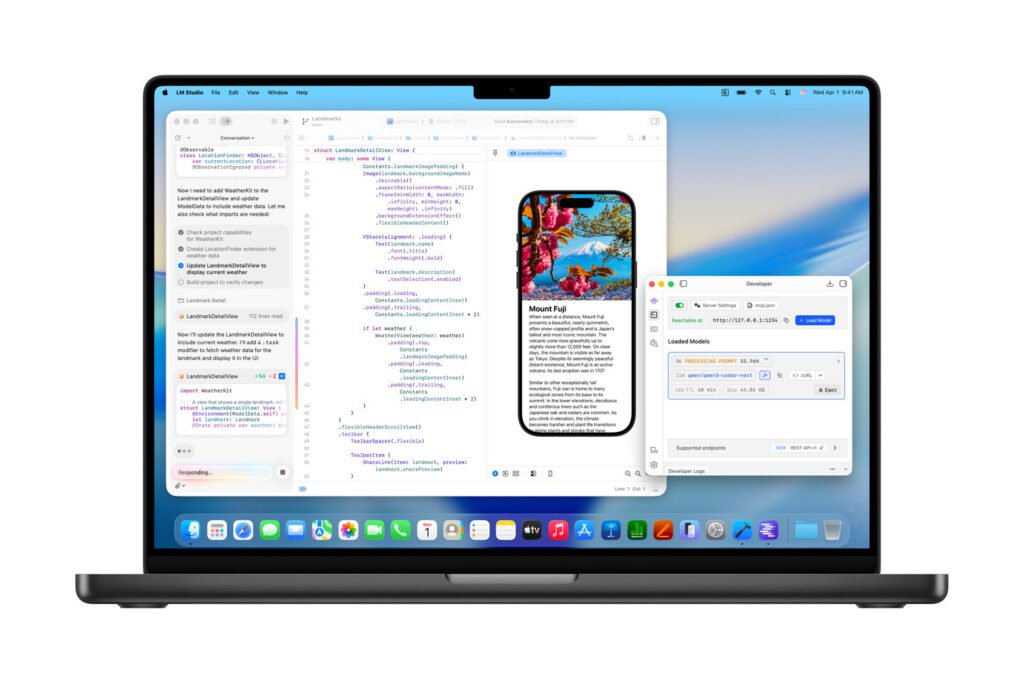
With M5 Pro and M5 Max, Apple continues to expand its silicon portfolio for professional laptops, focusing on higher core counts, stronger GPU scaling, faster unified memory, and integrated high-speed connectivity. The new chips are positioned to address the needs of developers, content creators, engineers, and AI researchers who require sustained performance in demanding workflows.
Apple M5 Pro vs M5 Max Specifications
| Specification | Apple M5 Pro | Apple M5 Max |
|---|---|---|
| Process Node | Third-generation 3nm | Third-generation 3nm |
| Architecture | Fusion Architecture (Dual-Die SoC) | Fusion Architecture (Dual-Die SoC) |
| CPU Cores | 18-core CPU (6 Super Cores + 12 Performance Cores) | 18-core CPU (6 Super Cores + 12 Performance Cores) |
| CPU Performance | Up to 30% faster vs M4 Pro | Up to 15% faster vs M4 Max |
| GPU Cores | Up to 20-core GPU | Up to 40-core GPU |
| AI GPU Compute | Over 4x vs previous generation | Over 4x vs previous generation |
| Ray Tracing Performance | Up to 35% faster vs M4 Pro | Up to 30% faster vs M4 Max |
| Unified Memory | Up to 64GB | Up to 128GB |
| Memory Bandwidth | Up to 307GB/s | Up to 614GB/s |
| Neural Engine | 16-core Neural Engine | 16-core Neural Engine |
| Media Engine | H.264, HEVC, AV1 decode, ProRes encode/decode | H.264, HEVC, AV1 decode, ProRes encode/decode |
| Thunderbolt Support | Thunderbolt 5 (Dedicated Controller per Port) | Thunderbolt 5 (Dedicated Controller per Port) |
| Security Feature | Memory Integrity Enforcement | Memory Integrity Enforcement |
| Target Users | Creators, developers, pro workloads | 3D artists, AI researchers, advanced workflows |