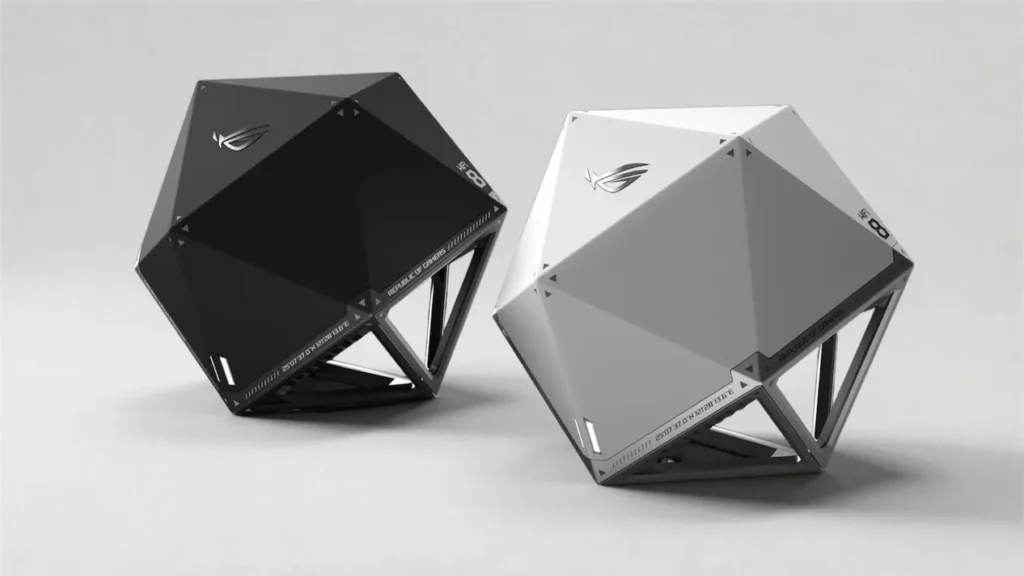
At CES 2026, ASUS showcased its ROG NeoCore concept router, offering a first look at how Wi-Fi 8, also known as 802.11bn, is shaping the next phase of wireless networking. Alongside the hardware concept, ASUS carried out what it described as the first real-world throughput test of Wi-Fi 8, shifting attention away from peak data rates and toward practical performance improvements.
Unlike earlier transitions between Wi-Fi standards, Wi-Fi 8 does not introduce higher maximum transmission speeds compared to Wi-Fi 7. ASUS emphasized that the goal of the new standard is to improve how networks behave under everyday conditions. This includes maintaining stable connections over longer distances, handling multiple devices more efficiently, and reducing delays during periods of heavy network use.
Wi-Fi 8 places a strong focus on reducing signal attenuation, allowing wireless connections to maintain usable signal strength over longer distances. This improvement is especially relevant for larger homes and office environments where coverage consistency often becomes an issue. Alongside extended range, Wi-Fi 8 also brings enhancements to bidirectional communication, with particular benefits for low-power devices such as smart sensors and connected home products. These devices frequently face challenges with stable upstream connectivity, an area where the new standard is designed to deliver more reliable performance.
Intelligent spectrum coordination is another feature demonstrated during the presentation. According to ASUS, this technology helps manage overlapping wireless signals from nearby networks, reducing conflicts that can lead to dropped connections or reduced performance. This approach is intended to improve stability in dense environments such as apartments, offices, and public venues.
Based on ASUS’s internal testing, Wi-Fi 8 delivered up to twice the mid-range throughput compared to Wi-Fi 7. This gain was measured at distances where many users typically experience speed drops rather than at close range. The company also reported up to two times wider coverage for IoT devices, suggesting better reliability for smart home ecosystems spread across multiple rooms.
Latency improvements were another focus. ASUS stated that Wi-Fi 8 reduced P99 latency to one-sixth of Wi-Fi 7 levels. Lower tail latency can improve responsiveness in real-time applications such as video conferencing, online gaming, and cloud-based services, where consistent response times matter more than raw bandwidth.
The ROG NeoCore shown at CES 2026 remains a concept design, and ASUS has not announced when Wi-Fi 8 consumer routers will reach the market. Even so, the early demonstration indicates that the next wireless generation is focused less on headline speeds and more on improving everyday network behavior across a wide range of connected devices.