Japanese electronics brand Hidisc has launched a new pair of affordable Bluetooth audio glasses in Japan, offering wireless music playback without the cameras, AI assistants, and other features commonly found in smart eyewear. The Hidisc Sound Glasses HD-SGSPBLBK are designed to function as a wireless headset built into an ordinary-looking pair of glasses, with a price tag of just ¥3,980 (approximately $25).
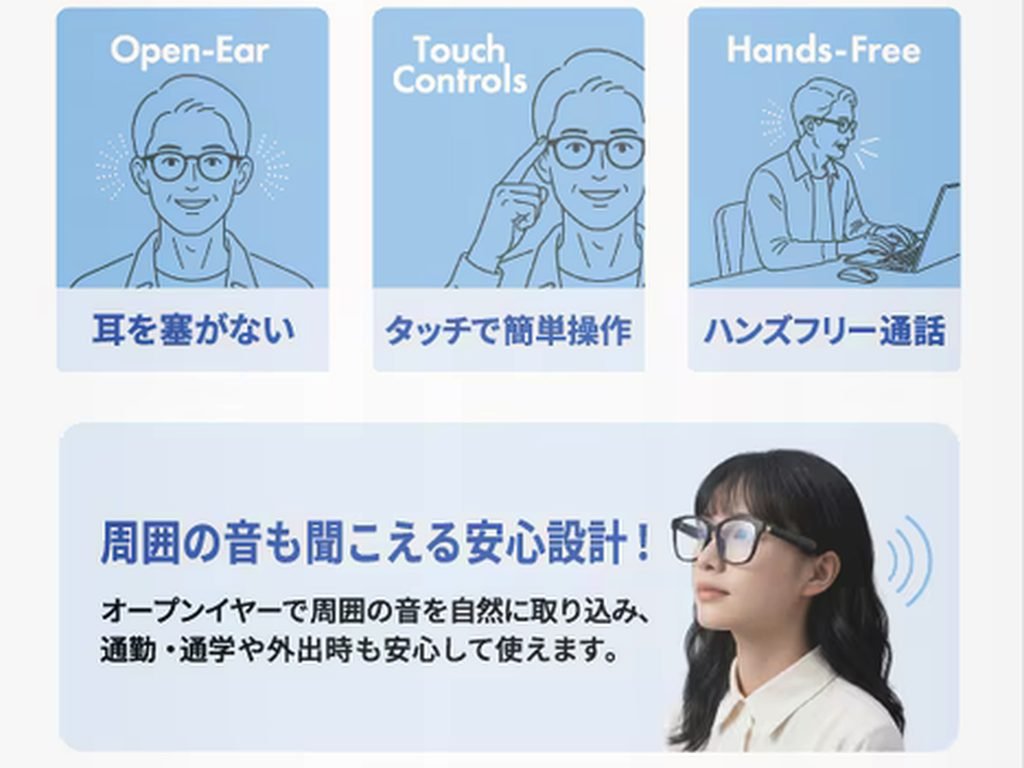
Released on November 20, the glasses weigh approximately 31 grams and feature 10 mm speakers integrated into both temples. The open-ear audio design allows users to listen to music, podcasts, and language lessons without blocking their ear canals, making it possible to remain aware of surrounding sounds and conversations.
The Hidisc Sound Glasses support Bluetooth 6.0 connectivity, although audio transmission is limited to the SBC codec. Their lenses also include blue-light filtering, while touch-sensitive controls allow users to manage playback, skip tracks, and answer phone calls. A built-in microphone handles hands-free conversations.
Hidisc has also given the glasses an IPX5 water-resistance rating, providing protection against water jets and making them suitable for use during workouts or in light rain. Power comes from two 80 mAh batteries, with one installed in each temple. The included magnetic charging system takes approximately 2.5 hours to recharge the glasses.
Battery life figures are less consistent across Hidisc’s specifications. The company’s press announcement claims up to 5.5 hours of music playback, whereas the official product page lists 3.5 hours. This discrepancy makes the actual playback endurance worth checking in independent testing.
The HD-SGSPBLBK Sound Glasses are currently available through Hidisc’s Japanese Flash Store for ¥3,980. The company has not confirmed international availability or pricing.
Unlike camera-equipped smart glasses from other manufacturers, Hidisc’s latest offering focuses entirely on wireless audio. There is no AI assistant, camera, or real-time translation feature. Instead, the company is targeting consumers who want music and hands-free calling integrated into everyday eyewear without paying for features they may never use.