Qualcomm appears to be adopting a modified approach for its next-generation flagship chipset launch, with reports suggesting the introduction of two models: the Snapdragon 8 Elite Gen 6 Pro and the Snapdragon 8 Elite Gen 6. The key distinction between the two variants is expected to revolve around memory and storage support. The Pro model is reported to support LPDDR6 RAM and UFS 5.0 storage, while also maintaining compatibility with older memory standards such as LPDDR5X and LPDDR5. This flexibility could help smartphone manufacturers manage component costs amid current DRAM market fluctuations.
According to Weibo tipsters, Xiaomi is already testing the Snapdragon 8 Elite Gen 6 Pro, identified by the SM8975 model number. However, the company’s upcoming flagship devices may not include LPDDR6 RAM. Another source, Smart Chip Insider, claims that LPDDR6 modules will be roughly 20 percent more expensive than LPDDR5X and may initially only be available in 16GB configurations. This pricing difference could influence manufacturers’ decisions on which memory configuration to adopt in their flagship devices.
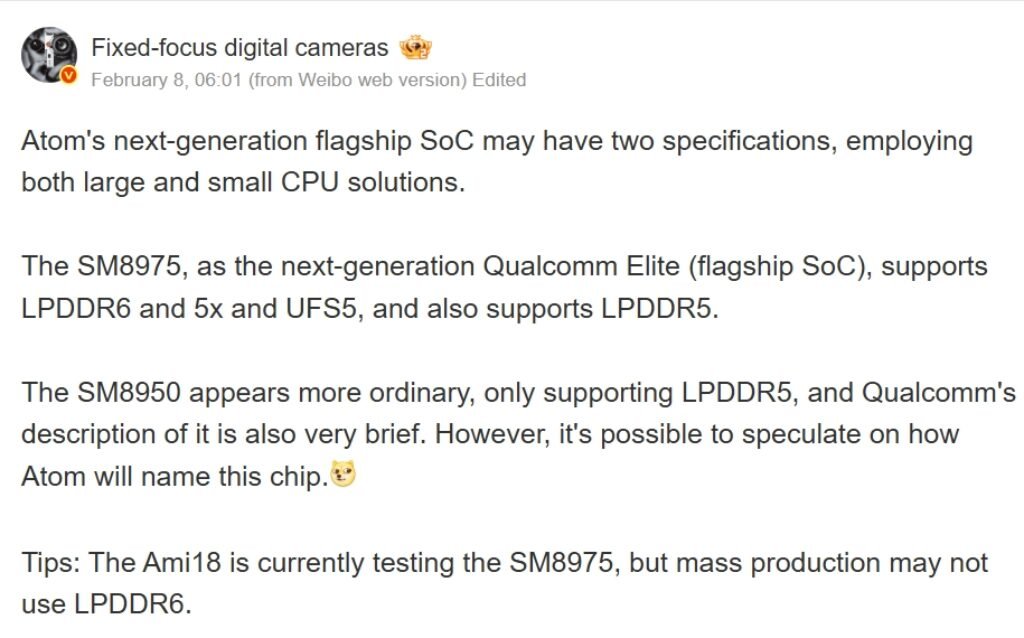
The Snapdragon 8 Elite Gen 6, on the other hand, is expected to support only LPDDR5 RAM. This is notable because even the non-flagship Snapdragon 8 Gen 5 chipset supports LPDDR5X memory. It remains unclear whether this limitation is due to translation errors, misinformation, or a deliberate design choice by Qualcomm. Regardless, offering backward-compatible memory options in the Pro model may provide brands with a way to balance performance and cost.
Qualcomm is also expected to transition the Snapdragon 8 Elite Gen 6 Pro to TSMC’s 2nm N2P fabrication process for the first time. While this node promises efficiency and performance improvements, it is likely to increase production costs. Combined with higher memory prices, the total cost of devices using the Pro chipset could be significant. The option to use older RAM standards may give manufacturers some flexibility in managing margins without compromising the adoption of the latest chipset features.
No official launch dates or specifications have been confirmed by Qualcomm. More details are expected in the coming months, and the final configurations may vary depending on manufacturer adoption and component availability.